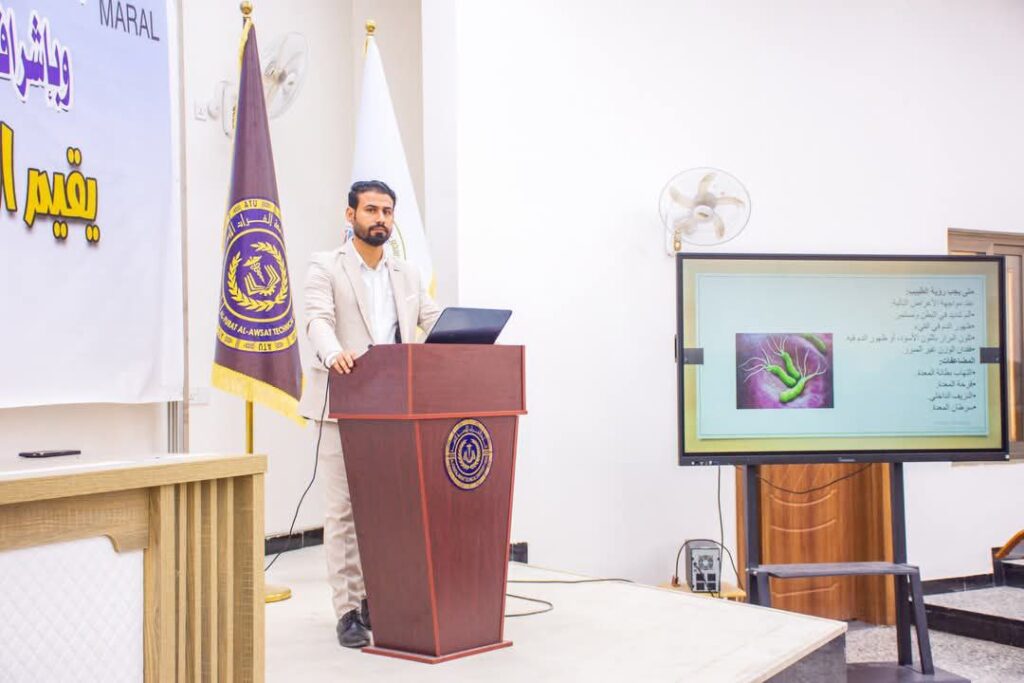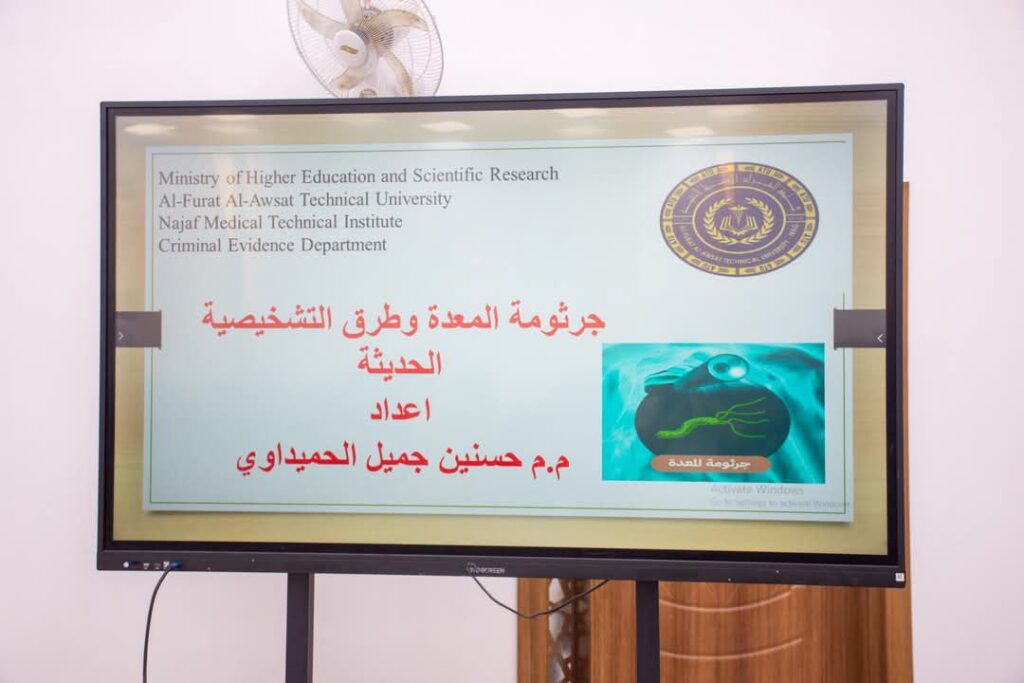

The Rehabilitation and Employment Division at the institute organized a specialized training course titled “Helicobacter pylori and the Diagnostic Methods Used”, delivered by Mr. Hassanein Jameel, a lecturer in the Department of Health Management Technologies, with the attendance of a number of students, academic staff, and individuals interested in health affairs.
The course came as part of a series of training programs aimed at developing students’ scientific and practical skills in the field of public health. It focused on enhancing knowledge about Helicobacter pylori, one of the most common causes of chronic gastrointestinal infections.
The course aimed to provide participants with an in-depth understanding of the bacterium’s nature, its infection mechanisms, diagnostic and detection methods, as well as a review of the latest treatment strategies in accordance with global standards.
On the first day, the lecturer covered both the typical and atypical clinical symptoms associated with the infection and provided a detailed explanation of the bacterium’s laboratory classification as a gram-negative species, along with its pathological impact on the upper gastrointestinal tract, especially in the context of ulcers and gastrointestinal cancers.
The second day focused on epidemiology and diagnostic methods, presenting the latest global statistics regarding the prevalence of the bacterium, particularly in developing countries. The session included a discussion on the factors contributing to infection and modes of transmission. Non-invasive diagnostic techniques such as breath tests and blood analysis were also reviewed, along with the challenges of detecting early-stage cases.
The final day featured a detailed presentation on triple and quadruple treatment protocols, highlighting the issue of antibiotic resistance and its therapeutic challenges. A practical explanation was provided on the latest molecular diagnostic techniques such as Polymerase Chain Reaction (PCR) and the use of endoscopy supported by advanced imaging technology. Future directions in the development of effective vaccines and immunotherapy were also discussed.
Professor Dr. Haider Hassan Al-Abdali, Dean of the Institute, emphasized that the course was a significant addition for the participants and contributed to enhancing their scientific capabilities in diagnosis and treatment, aligning with the latest advancements in the medical field. Participants praised the course content and its organization, expressing their eagerness for more specialized scientific programs in the future