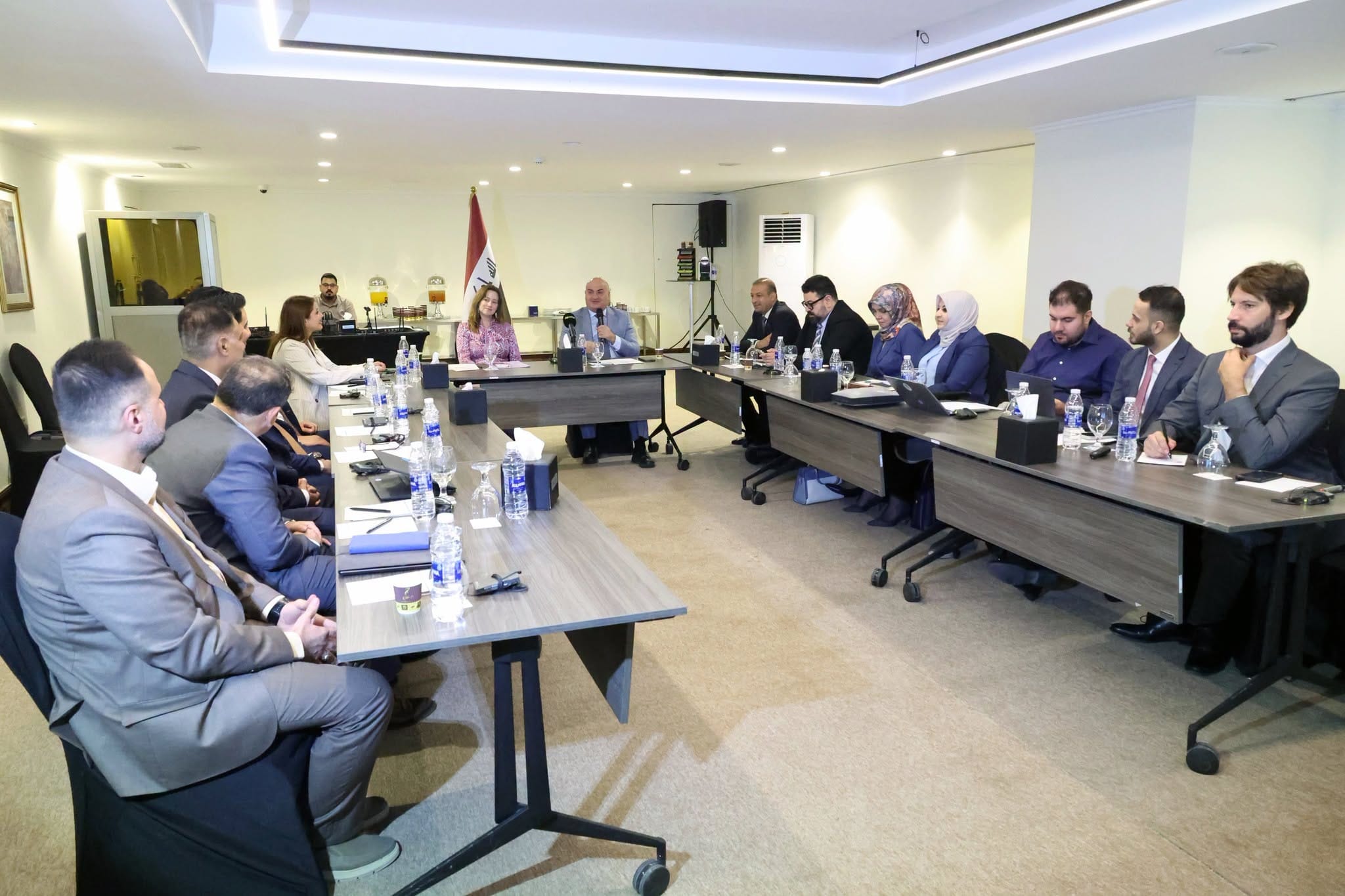
The Ministry of Higher Education and Scientific Research organized a specialized workshop on the micro-credential system in cooperation with the United Nations Children’s Fund (UNICEF) and the International Labour Organization (ILO).
In his opening remarks at the workshop, which was attended by representatives of the two organizations, a number of university presidents, the Director General of the Department of Studies, Planning and Follow-up, and several specialists, the Ministry’s Undersecretary for Scientific Research Affairs, Professor Dr. Haider Abdul Dhahd, emphasized the importance of developing the technical and vocational education and training (TVET) system and keeping pace with modern trends in the field of micro-credentials in a manner that responds to labour market requirements and development needs. He welcomed the participants and praised cooperation with international organizations in supporting efforts to develop education and training in Iraq.
The Undersecretary stressed the importance of establishing a legislative and regulatory framework for micro-credentials in coordination and cooperation with the Ministry of Labour and Social Affairs, in a way that ensures the proper regulation of this pathway, the accreditation of its outcomes, and their recognition in accordance with approved national frameworks.
The workshop addressed the concept of micro-credentials, relevant global trends and standards, and their key characteristics, including their competency-based nature, stackability, verifiability, and alignment with labour market needs. It also reviewed their expected benefits for young men and women, vulnerable groups, and forcibly displaced persons, as well as the importance of this pathway in expanding learning opportunities and skills acquisition in Iraq.
The workshop also examined UNICEF’s role in supporting the development and implementation of the pilot micro-credentials project in Iraq from the perspective of the transition from learning to earning, promoting inclusion, and benefiting from international practices and experiences. In addition, it reviewed the rationale for the project and its alignment with the National Technical and Vocational Qualifications Framework (TVQF) and relevant national strategies.
Participants discussed the quality assurance framework and mechanisms for the verification and recognition of micro-credentials, as well as the role of the Ministry of Higher Education and Scientific Research and its institutions in developing this pathway and aligning it with national reforms and initiatives supported by international partners.
The workshop also addressed mechanisms for making micro-credential programs accessible to young people, persons with disabilities, and forcibly displaced persons. Participants explored ways to engage employers and labour unions in identifying the required skills and designing programs that are aligned with labour market needs and professional development requirements.
For his part, the President of the Middle Technical University, Professor Dr. Waddah Amer Hatem Al-Tamimi, emphasized the important role of technical universities in combining academic knowledge with practical skills, thereby preparing educational outcomes that are more closely aligned with the evolving requirements and needs of the labour market.
Government Media and Communications Department
Ministry of Higher Education and Scientific Research
19 August 2026