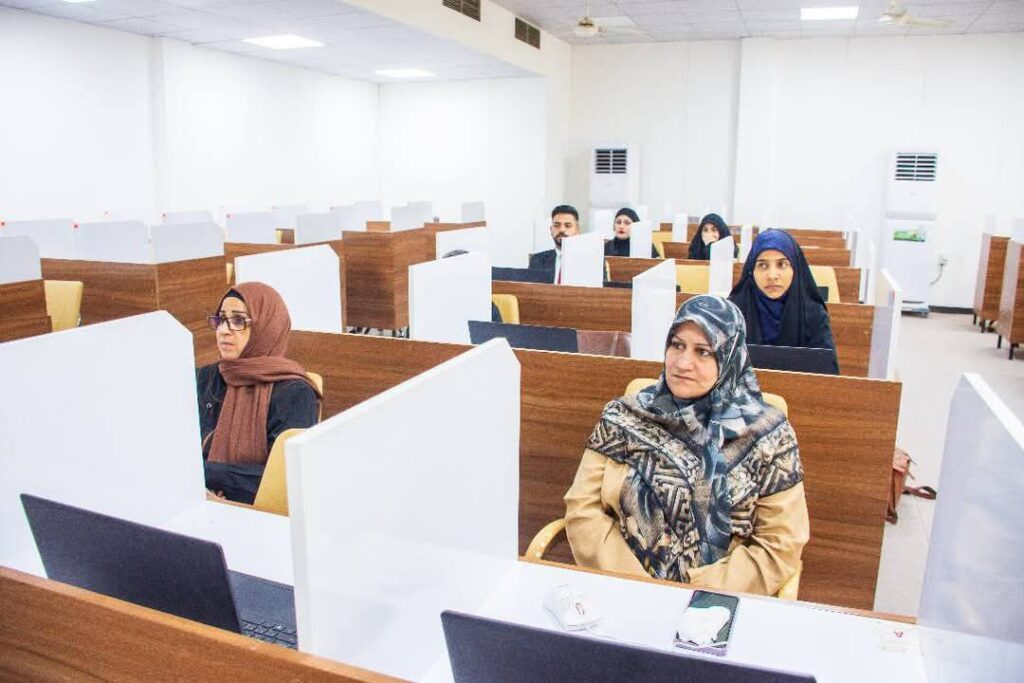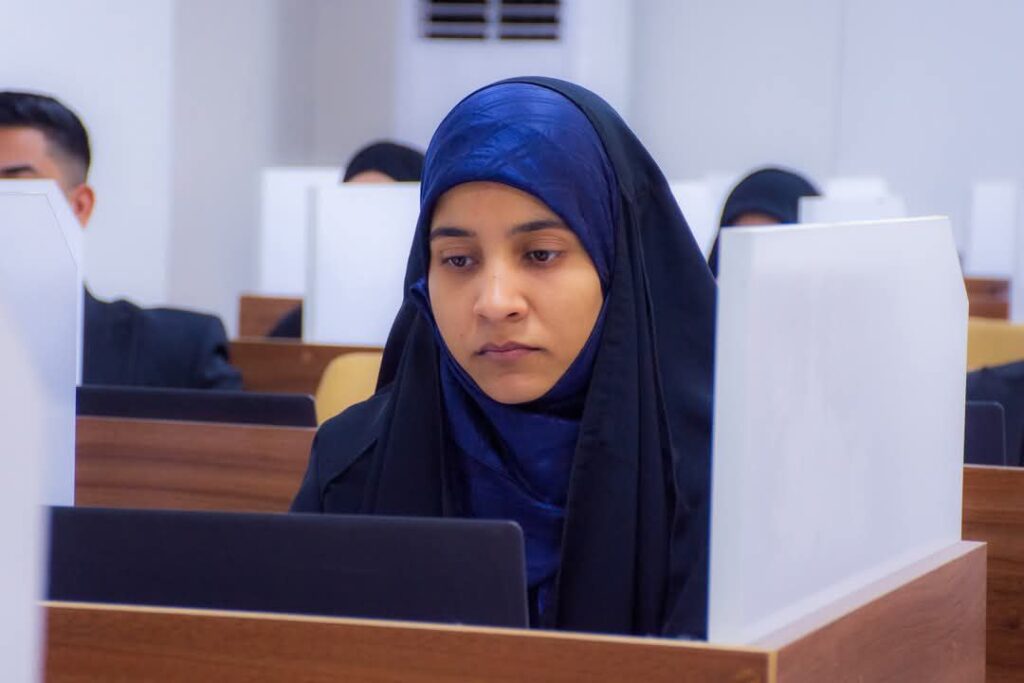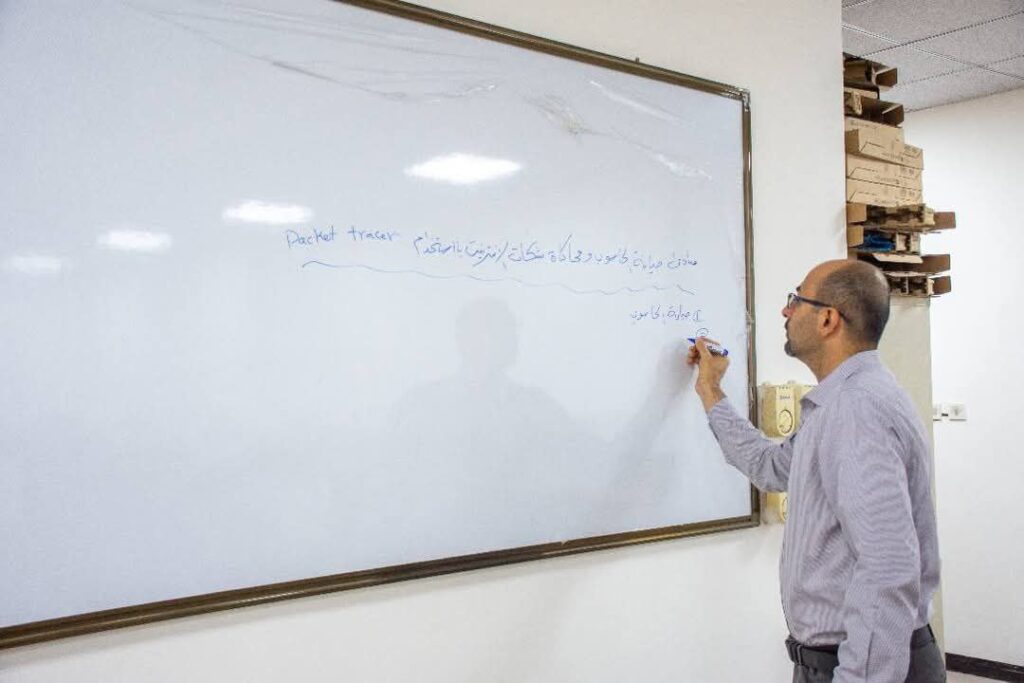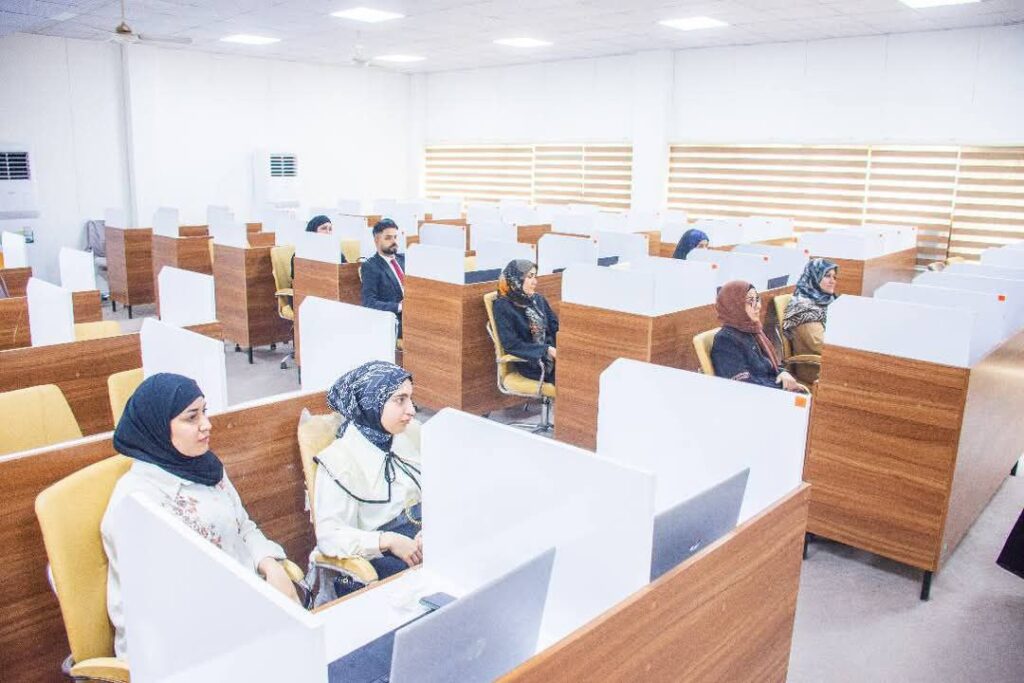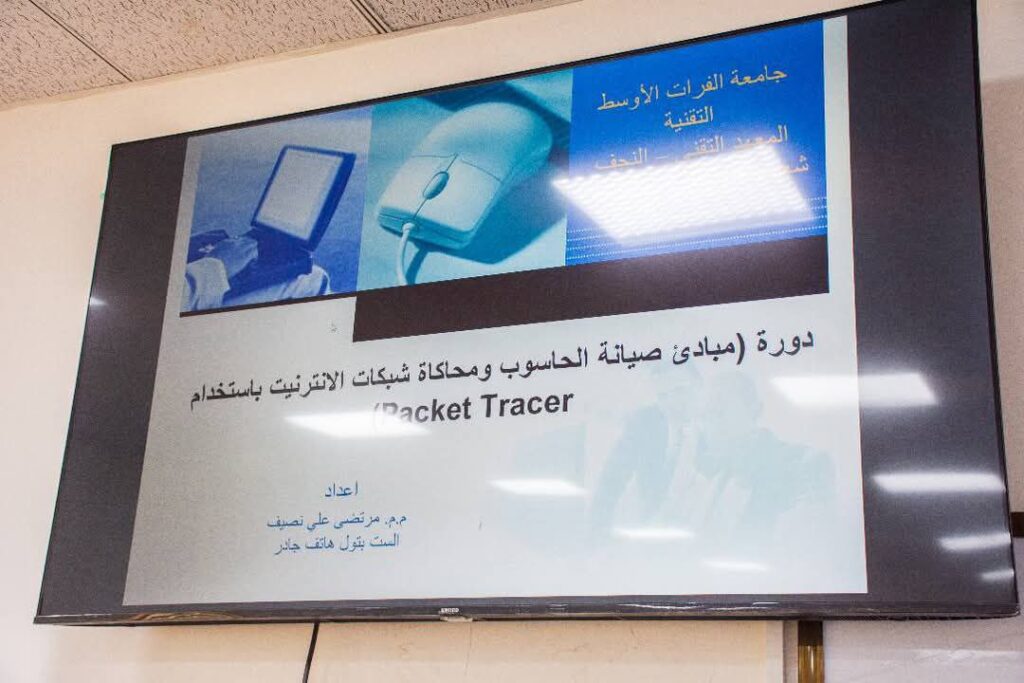

An intensive training course entitled “Principles of Computer Maintenance and Internet Network Simulation Using Packet Tracer” concluded at the institute over five consecutive days. The course was presented by a select group of highly qualified trainers, including M.M. Murtadha Ali Naseef and Ms. Batoul Hatef Jader.
The course aimed to provide participants with the basic knowledge and skills necessary for maintaining and diagnosing computer hardware, as well as understanding the principles of computer networks and how to design and simulate these networks using the popular Cisco Packet Tracer program. The course program included various scientific and practical topics over the course of five days:
Day One: The course began with a comprehensive introduction to computers, introducing participants to the concept of computers and their various types. A detailed explanation of the basic components of a computer, both hardware and software, was also provided, focusing on the functions of each component and its importance in the operation of the device. Day Two: Focused on the practical aspects of computer maintenance, explaining the operating system installation process (formatting) theoretically and practically. Participants also learned about the VirtualBox environment and how to use it to create a virtual environment for formatting and installing various operating systems safely and effectively.
Day Three: Participants moved into the world of computer networks with a basic introduction to this field. The basic concepts of networks, their types, and how they work were explained. Cisco Packet Tracer was also introduced as a powerful tool for simulating, designing, and testing networks in a virtual environment before implementing them in real life.
Day Four: The practical application of networking concepts was presented, as participants learned how to connect computers. The focus was on setting up a local area network (LAN) between multiple devices and implementing this in practice, either using physical connection cables or through the simulation environment in Packet Tracer.
Day Five: The course concluded with a comprehensive assessment of participants’ knowledge and skills through a final exam covering the various course topics. In the same context, the Dean of the Technical Institute stated, “Holding this unique course on computer maintenance and network simulation using Packet Tracer, thanks to the efforts of the Institute’s professors, is a blessed and important step towards developing the competence of our technical and administrative staff. We always strive to empower our members with the skills necessary to keep pace with technological developments, and this course achieves this goal with distinction.”
The two lecturers emphasized the importance of training and developing the Institute’s technical and administrative staff on how to maintain and format computers efficiently and effectively. Additionally, they emphasized the importance of enabling staff to understand and apply how to connect and configure computer networks properly.
At the conclusion of the course, the lecturers presented a set of important recommendations for developing this field, including: adding and holding specialized courses in the fields of networks and communications using advanced training methods. Continuous training of staff to solve current problems facing networks and computers quickly and accurately, thus avoiding wasted time and costs.
This course represented a valuable addition to the Institute’s efforts to develop the competencies of its members in vital areas such as computer maintenance and internet networks. The course provided participants with essential knowledge and skills, emphasizing the importance of continuing to offer such specialized programs to achieve sustainable human resource development.